Pages

November 4 1812: Presidential Address


On November 4, 1812, President James Madison delivers to Congress the Fourth Annual Message. If we do not include articles, the top ten words, in terms of frequency, used by Madison were "our" (30 ), "war" (20), "under" (13), "them" (13), "enemy" (13), "British" (12), "without" (10), "against" (10), "states" (8) and "general" (8).

Madison's address is reproduced below.

November 4 1812: Ragamuffins


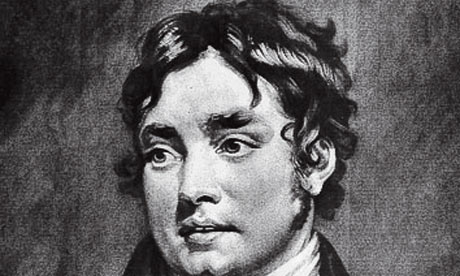
On November 4 , 1812, John Murray, writes to Lord Byron about a number of things including the continuing reaction to the Address for the Opening of Drury Lane Theatre. Murray describes Byron's critics as Ragamuffins. He writes:
50 Albemarle Street, London 
My Lord - I had the pleasure of receiving your obliging letter, dated the 23rd but was unwilling to intrude an answer upon you until something important should cast up – and the occasioned is now furnished, by the tremendous “Critique upon Lord Byrons Address” which I have the honour to inclose, under this and another cover – Your Lordship declined writing the address originally, because “you would not contend with all Grub Street” – but you did not suspect, at that time, that success would induce all Grub Street to contend against you – but this is the present state of the war – Your Lordship will have seen by the Chronicle of today & yesterday that it is in contemplation to collect & publish in one volume the whole of the rejected addresses – which would be an excellent subject of  fun for an article in the Review, and Mr G would I think join forces with you –

November 4 1812: Adam's Napoleon


On November 4, 1812, in St Petersburg, John Quincy Adams  discusses the feelings that Napoleon engenders. He makes the following  entry  in his diary: 
4th. Went out to Ochta, and dined at Mr. Krehmer's. Mr. Harris was there, Mrs. Pitt, the wife of the English clergyman, and two Mr. Gisbornes, sons of Dr. Gisborne the author, who live with Mr. Krehmer. There was much political conversation, characteristic as well of the present state of affairs as of the feelings of the speakers. The passions of almost all the politicians whom I now see and hear are concentrated upon the head of one man. It seems almost universally to be considered that the destinies of mankind hang upon his life alone; and in proportion to the force of this sentiment is the ardor for his death. I know not how it has been with former conquerors during their lives, but I believe there never was a human being who united against himself such a mass of execration and abhorrence as this man has done. There is indeed, on the other hand, an admiration of him equally enthusiastic, as for every great conqueror there always must be; but I have never yet seen the person by whom he was regarded with affection.


November 3 1812: Coleridge's Dull Lecture


On November 3 1812,  Samuel Taylor Coleridge gives his first lecture on Belles Lettres at the Surrey Institution. Henry Crabb Robinson is in attendance and is not impressed. He writes in his diary:
At Coleridge's first lecture on Belles Lettres at Surrey Institution. It was a repetition of former lectures & dull. He enlarged on the vagueness of terms & their abuse, & in defining taste, gave the Kantian theory as to the nature of judgments of taste. He introduced, I had almost said cantingly, some pious parenthesis about religion a la Wood, & did not on the whole gratify me exceedingly.

November 2 1812: Diplomatic Dinner

On November 2 1812, John Quincy Adams, in St Petersburg has a nice diplomatic dinner with Count Romazoff. He then sits down between Count Maistre and Count Lowenhielm, and discuss "the American Indians, about creation, and about the desperate condition and almost certain ruin of the French Emperor and army." His diary entry reads:
November 2d. Dined at Count Romanzoff's with a diplomatic company—about forty-five persons. The Count told me before dinner that he believed the grant I had asked for Mr. Fulton would be made; that the Emperor had only thought proper to fix a different modification of time. Mr. Fulton asked an exclusive privilege for twenty years. But the grants of patents in America and in England were only for fourteen years, and the Emperor thought proper to allow one year more—the privilege therefore would be for fifteen years. At table I got between Count Maistre and Count Lowenhielm, and conversed about the American Indians, about creation, and about the desperate condition and almost certain ruin of the French Emperor and army. Baron Blome told me that the Swedish expedition against the island of Zealand was probably postponed, but they now threatened the invasion of Norway. Blome himself has yet the deportment of an assiduous courtier, and is treated in return with a coldness bordering, to say the least, upon incivility

November 2 1812: Lovett's Truth will Prevail


On November 2 1812, Major Lovett, stationed in Buffalo writes to his friend in Joseph Alexander. He is still trying to convey the impression that Queenston was a success for the American side or at least that there was no dishonor in the way the troops had fought. He writes:
Conscious that our little Family have done all that they could, and more than any other three Men have, or can do, we feel tranquil, and however the world may, for the present, attempt to dispose of the Battle of Queenstown, in the end I do know that Truth will prevail, and it will be acknowledged that all that could be done has been done. Every day furnishes new evidence of the astonishing intrepidity of the Americans engaged in the action. The fact is repeated, over and over again, by British Officers, that in the first place, they did not believe we would fight at all; and in the next, that the men fought more like Devils than any thing else; that for the first ten hours, all resistance opposed was perfectly idle.
Lovett's letter  is reproduced below. 

November 1 1812: The "Fenians" of 1812


On November 1, 1812, a British major takes a survey  of  the prisoners of war held in the Montreal jail. These prisoners had been captured fighting on the American side. The British major finds that almost all of the prisoners are Irish. The historian Alan Taylor writes:
On November 1, 1812, at the Montreal jail, a British major compiled a list of thirty-nine suspects captured in the American service. Almost all (thirty-two of thirty-nine) confessed to be Irish or were “supposed to be Irish.” The seven exceptions came from England (three), Canada (two), Wales (one), and the Isle of Man (one). The Irish prominence was no surprise, given that most American immigrants came from Ireland. And, unlike the English and the Scots in America, the Irish were eager to fight for the republic and against the empire. In addition, their strong accents and distinctive manners rendered them marked men. Barclay noted, “It may occur that an American may be mistaken for an Englishman and vice versa; but Scotch and Irish features and dialect are too obvious ever to be mistaken".
Earlier, Taylor puts the prominence of Irish-Americans in the war in context writing: