Pages

July 15 1812: Hull's Zenith


On July 15 1812, Brigadier-General Hull writes the Secretary of War Eustis from Sandwich, Upper Canada. Hull is still very confident. He expects the desertions of the Canadian militia to continue. He writes:"The Canadian militia are deserting from Malden in large parties; about sixty came in yesterday. I send them to their homes and give them protection. The probability is that the greatest part of them will desert in a few days".  For the British, Colonel Elliott writing to Colonel Claus confirms the effect of Hull's Proclamation leading to desertions of the militia. He writes: "Their Proclamations have operated very powerfully on our Militia (who had come forward with as much promptitude as could have been expected). Since their issuing our Militia have left their Posts and returned to their homes, so that since Sunday the number is reduced to about one half, and I expect that in two or three days we shall have very few of them at the post".  

At the same time, Colonel Elliot notes that he has been able to retain the support of the natives at Amherstburgh thanks to the leadership of Tecumseh. Colonel Elliott writes: "The Indians with us are between 3 & 400 who have resisted every allurement which Gen Hull laid before them. Tech-Kum-thai has kept them faithful-- he has shewn himself to be a determined character and a great friend to our Government. 

Hull's letter is reproduced below.

July 15 1812: John Quincy Adams


On July 15, 1812, John Quincy Adams, the American Ambassador to Russia in St. Petersburg, describes his meetings with various ambassadors allied with France and how they now must leave Russia. Part of Adams' entry for July 15 1812 is reproduced below.

July 12 1812: Wellington to Bathurst

On July 14 1812, Earl of Wellington, in Rueda, Spain, writes to the Secretrary of State, the Earl of Bathurst to update him the Peninsular campaign. Wellington has been shadowing the French forces of Marshall Marmont for some time. He is hesitant to attack.  He writes: "In truth, the enemy's numbers are equal, if not superior to ours; they have in their position twice the amount of the artillery which we have, and we are superior in cavalry alone, which arm, it is probable could not be used in the attack we should have to make". Wellington's full letter is reproduced below.

July 13 1812: Dickson to Brock


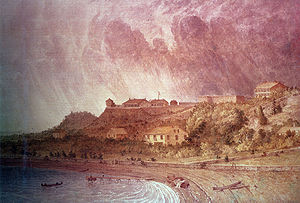
On July 13, 1812, Robert Dickson, a Scottish fur trader writes to Major-General Brock. Dickson is accompanying Captain Roberts who is leading a force to attack Fort Michilimackinac located in the Straits of Mackinac between Lake Michigan and Lake Huron. On his own initiative, Roberts had decided to attack the fort. Dickson had brought a force of about four hundred including Ottawa, Ojibwa, Menominee, and Winnebago warriors.  The attack will come on July 17.  On July 13, Dickson writes to Brock:

July 13 1812: Generals Write to Secretary of War


On July 13 1812, General Dearborn is still in Boston though he has been told to go to Albany. In addition, as the Senior major general in the United States Army in command of the northeast sector,  he should have been providing assistance to General Hull who yesterday invaded Upper Canada. Dearborn on July 13 writes to the Secretary of War Eustis providing his excuses:
For some time past I have been in a very unpleasant situation, being at a loss to determine whether or not I ought to leave the sea-coast. As soon as war was declared [June 18] I was desirous of repairing to Albany, but was prevented by your letters of May 20 and June 12, and since that time by the extraordinary management of some of the governors in this quarter. On the receipt of your letter of June 26 I concluded to set out in three or four days for Albany, but the remarks in your letter of the 1st inst. prevented me. But having waited for more explicit directions until 1 begin to fear that I may be censured for not moving, and having taken such measures as circumstances would permit for the defence of the sea-coast, I have concluded to leave this place for Albany before the end of the present week unless I receive orders to remain.
Meanwhile, General Hull is at Sandwich, Upper Canada. He also writes to the Secretary of War:  

BRIG.-GENERAL HULL TO THE SECRETARY OF WAR. Sandwich, in Upper Canada, July 13th  
Sir — from the 5th July inst. the day of the arrival of the army at Detroit, the whole was employed in strengthening the fortifications for the security of the town, and preparing boats for the passage of the river. About one hundred regulars of the British army, and, from the best accounts I have been able to obtain, six hundred Canadian militia with artillery, were in possession of the opposite bank, and fortifying directly opposite the town; seven or eight hundred Indians were likewise attached to this copies.

July 12 1812: Athenian Destinies


On July 12 1812, Thomas Jefferson writes to Benjamin Henry Boneval Latrobe. Latrobe was a British immigrant and professionally trained architect who designed the  United States Capitol. The work on the Capitol stopped when the war started. Jefferson was a great patron and admirer of Latrobe.  On July 12 Jefferson is responding to a question about a dinner in 1807 which Jefferson cannot recall.  Jefferson candidly admits that his memory is failing and that is one of the reasons why he retired from public business. He goes on to praise Latrobe's work and hope that it will continue. Jefferson writes with a flourish: "I shall live in the hope that the day will come when an opportunity will be given you of finishing the middle building in a style worthy of the two wings, and worthy of the first temple dedicated to the sovereignty of the people, embellishing with Athenian taste the course of a nation looking far beyond the range of Athenian destinies". Jefferson's letter is reproduced below.

July 12 1812: Proclamation to Canada


On July 12, 1812, General Hull, having captured the settlement of Sandwich publishes a Proclamation in English and French, to the inhabitants of Canada. Hull hopes that the Proclamation will rally Canadians to the American invaders. He is not initially disappointed as many inhabitants of Upper Canada do support or at least do not oppose the Americans. The Proclamation offers American liberty to Canadians, in a not altogether, free way: "The UNITED STATES offer you peace, liberty and security. Your choice lies between these & WAR, slavery, and destruction." At the same time, Hull's Proclamation also reveals his fear of natives or first nations. The Proclamation states that any soldier found fighting with any native will not be taken a prisoner but will be killed. The Proclamation reads:"The first stroke of the Tomahawk, the first attempt with the scalping knife, will be the signal for one indiscriminate scene of desolation. No white man found fighting by the side of an Indian, will be taken prisoner. Instant destruction will be his lot." This is important to remember later as first nations were to fight alongside British and Canadian militia. According to Hull, they all should be killed. The full Proclamation is reproduced below.