Pages

June 12 1812: Senate Deliberates Amending War


On June 12, 1812, the Senate continues its debate on the House's bill entitled "An act declaring war between Great Britain and her dependencies, and the United States and their territories." The Senate had set up a select committee to consider the President's message of June 1, 1812. This committee was chaired by Senator Joseph Anderson of Tennessee (pictured on the left). The committee was then given the task of reviewing the House's war bill on June 5. The various deliberations that followed showed how divided Senators were on the issue of war. Some senators wanted to limit the declaration of war to allow only for reprisals by  American War ships and privateers on Britain.  A vote on June 12, 1812, provided for such a limitation and passed by 17-13. Other senators were against any declaration of war. Some senators  wanted war against both France and England.

On June 12, 1812, Senator Anderson read his committee's report which proposed substantial amendments to the bill passed by the House. 

June 12 1812: Adams on Religion


On June 12, 1812, John Adams in a typically eccentric letter has religion on his mind and writes a long rambling letter to Benjamin Rush. Adams writes that the National Fast he recommended while president cost him the election to Jefferson. He writes: "The National Fast recommended by me turned me out of office.... I was represented as a Presbyterian and at the head of this political and ecclesiastical Project. The secret whispers ran through them [all the sects] "Let us have Jefferson, Madison, Burr, any body, whether they be Philosophers, Deists, or even Atheists, rather than a Presbyterian President." His conclusion is that "Nothing is more dreaded than the National Government meddling with Religion". Adams also will not have anything to do with a nostalgia that argues that there was no acrimony or division during the American Revolution. He writes: "Nothing can be farther from the Truth. We were more divided in 74 than we are now." Adams' letter is reproduced below.

June 11 1812: Shelley to Godwin


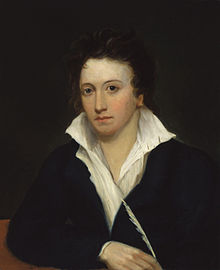
On June, 11  1812, Percy Bysshe Shelley again writes to William Godwin. Shelley is still living at Nantgwilt in Radnorshire, Wales but already has plans to leave within a week.  He tells Godwin that he has outline of what will  become A Letter to the Lord Elleborough in defence of Isaac Daniel Eaton. Lord Elleborough had been the presiding judge at the trial that convicted  Eaton of "blasphemous libel." Eaton had printed part three of Thomas Paine's Age of Reason. He was sentence to eighteen months in Newgate Prison and a monthly pillorying for the entire term of his sentence.  Shelley`s letter is reproduced below. 


June 11 1812: Wordsworth Learns of Daughter's Death

On June 11, 1812, William Wordsworth receives the letter from his sister Dorothy telling him that his daughter Catherine has died. He receives the letter a week after her death on June 4  and three days after her funeral. Dorothy's letter was delayed so that by the time William receives it Mary Wordsworth in Hindwell, Wales has already learned of Catherine's death. William's first thought is to go to his wife. He finds her inconsolable. She is "tortured by the belief that, had she been there, a mother's instinct might have enabled her to save her child". [1] Mary will recover from her grief only to be shaken anew when their younger son Thomas Wordsworth will die in December, 1812.  A few years later, William will write Surprised by Joy about the loss of his daughter.

Surprised by joy – impatient as the Wind
I turned to share the transport – Oh! with whom
But Thee, deep buried in the silent tomb,
That spot which no vicissitude can find?
Love, faithful love, recalled thee to my mind –
But how could I forget thee? Through what power,
Even for the least division of an hour,
Have I been so beguiled as to be blind
To my most grievous loss? – That thought’s return
Was the worst pang that sorrow ever bore,
Save one, one only, when I stood forlorn,
Knowing my heart’s best treasure was no more;
That neither present time, nor years unborn
Could to my sight that heavenly face restore.


Notes


1. Juliet Barker, Wordsworth: A Life (New York, Harper Collins,2000), page 307
  

June 11 1812: Jefferson Writes to an Ancient Friend


On June 11, 1812, Thomas Jefferson writes to another old revolutionary companion from Massachusetts, Elbridge Gerry. Gerry   had just lost the governorship of Massachusetts but was being considered for the Vice Presidency. Gerry had a distinguished political career, serving as a delegate to the Continental Congress, signing the Declaration of Independence and the Articles of Confederation, attending as a delegate to the Constitutional Convention, but voting against the new constitution, serving in the new Congress as a strong supporter of Hamilton’s new Bank of United States, then being appointed as a member of the diplomatic delegation to France that was involved in the XYZ Affair, returning to the United in States in 1798 to become a supporter of Jefferson’s Democratic Republican party and running unsuccessfully four times for governor of Massachusetts under the party’s banner before being elected in 1810 and 1811 but losing in 1812 and ending his career as James Madison's Vice President  and dying in office on November 23, 1814.  He is now known for giving us the word “gerrymander.” His support of the redistricting legislation, designed to help his party stay in power, did not help him stay in power as he was defeated as governor in 1812. He can also be remembered as the second Vice President to die in office. The first being George Clinton, who also served under James Madison. This makes the Madison presidency the deadliest of all administrations as far as Vice Presidents are concerned and also the only administration that allowed the White House to be burned down. Jefferson's letter is reproduced below.

June 11 1812: Jefferson on English Seductions


On June 11 1812, Thomas Jefferson continues his correspondence with John Adams.  Adams had asked a number of questions about the first nations and Jefferson in an expansive letter answers him. He addresses different theories concerning the first nations including those of Adair who believed that "Indians of American to be descended from the Jews,  the same laws, usages, rites and ceremonies, the same sacrifices, priests, prophets, fasts and festivals, almost the same religion, and that they all spoke Hebrew". Jefferson does not seem altogether convinced. Jefferson ends his letter with expressions of admiration for various tribes which then takes a darker hue when he thinks of the current political situation. He writes that some tribes are subject to "English seductions" which for Jefferson usually means corruption, vice and degeneration. He contrasts these tribes with the Cherokees who, according to him, are moving towards "a regular representative government." Jefferson explicitly ties the conquest of Canada with the defeat of the Indian threat by removing the English influence on the first nations. Jefferson concludes his letter:
On those who have made any progress, English seductions will have no effect.  But the backward will yield, and be thrown further back.  Those will relapse into barbarism and misery, lose numbers by war and want, and we shall be obliged to drive them with the beasts of the forest into the stony mountains. They will be conquered, however, in Canada. The possession of that country secures our women and children forever from the tomahawk and scalping knife, by removing those who excite them;  and for this possession orders, I presume, are issued by this time; taking for granted that the doors of Congress will re-open with a declaration of war.  That this may end in indemnity for the past, security for the future, and complete emancipation from Anglomany, Gallomany, and all the manias of demoralized Europe, and that you may live in health and happiness to see all this, is the sincere prayer of yours affectionately.
The Jefferson's complete letter is reproduced below.

June 10 1812: Monroe to Foster


On June 10, 1812, Secretary of State James Monroe, is not leaving any diplomatic note from Augustus Foster unanswered. This time he is responding to Foster's  letters of June 7 and 8 that denied that the British government was involved in stirring up "Indian hostilities". Monroe responds by attaching a long list of extracts from letters on the issue. The conclusion that Monroe draws and communicates to Foster is that whatever may have been the disposition of the British Government "the conduct of its subordinate agents has tended to excite the hostility of those tribes towards the United States".  Monroe also cannot help but add a line that references indirectly John Henry's "spy" mission to the United States. Monroe's letter is reproduced below.